
Essential Guide to Well-Woman Exam: Prevention & Care
A well-woman exam is a routine preventive visit focused on sexual, reproductive, and overall health. It’s not just a gynecological exam, and it’s not the same for every person. The value is simple: you get time to talk through changes, risks, screenings, vaccines, contraception, periods, menopause, pregnancy plans, and concerns you might otherwise push aside.
What is a Well-Woman Exam?
A well-woman exam is a preventive health visit for women and people with gynecologic health needs. It usually includes a health history review, vital signs, risk screening, counseling, and any exams or tests that make sense for your age, symptoms, and medical history. HRSA-supported Women’s Preventive Services Guidelines recommend at least one preventive care visit per year starting in adolescence and continuing across the lifespan.
The point of a well-woman exam is to catch small issues early and keep care organized. My take is blunt: too many people skip the visit because they think it always means a pelvic exam or a Pap test. That misunderstanding costs people useful conversations about bleeding changes, pain, libido, mood, pregnancy planning, STI testing, bladder symptoms, breast concerns, and menopause.
The Visit Matters Even When Nothing Feels Wrong
Preventive care works best before symptoms become disruptive. The American College of Obstetricians and Gynecologists describes the well-woman visit as a chance to discuss healthy habits, risk reduction, and care across life stages, including perimenopause and postmenopause.
This is also where the meaning of a wellness check becomes clearer. A wellness check is not only a quick blood pressure reading or a form for work. When people ask, “What is a wellness check?” the plain answer is this: it’s a visit that reviews current health, screens for risk, and helps decide what care is needed next. For many women, a preventive care exam and a wellness visit overlap with gynecologic care, but they don’t always cover the same ground.
If you book an annual well-woman exam, expect the clinician to focus on prevention, not just problems. That might include conversations about vaccines, cancer screening, contraception, fertility goals, sexual health, mental health, family history, and safety at home. It can also connect the dots between general health and reproductive health, which is something a basic wellness exam may miss.
What Usually Happens During the Appointment?
What happens depends on your age, health history, symptoms, and concerns. Your well-woman exam may include a conversation, vital signs, breast or pelvic assessment when needed, lab testing when appropriate, and a plan for future screening. ACOG says pelvic exams are recommended when symptoms or medical history call for them, and a well-woman visit still matters even when a pelvic exam is not needed.
The conversation is the core of the visit
A good visit starts with questions. You may be asked about periods, bleeding, pain, discharge, sexual activity, STI risk, birth control, pregnancies, surgeries, medications, allergies, family history, tobacco or alcohol use, mood, sleep, and safety. It can feel personal, but that’s the point. The clinician needs context before deciding what screening, exam, or counseling is useful.
This is where people often get more value than they expected. A short question about heavy bleeding may lead to anemia testing. A discussion about painful sex may uncover pelvic floor issues, hormonal changes, infection, or skin conditions. A conversation about migraines may change which birth control options are safer.
The physical part should match your needs
People often search “what happens at a physical for a woman” because they want to know what they’re walking into. In a general physical, the clinician may check height, weight, blood pressure, heart, lungs, skin, and basic risk factors. In a woman’s preventive care visit, the clinician may also discuss reproductive health and may perform a gynecological exam if it’s needed.
That does not mean every appointment includes every exam. A pelvic exam, breast exam, Pap test, HPV test, STI test, or pregnancy test should be based on guidelines, symptoms, age, risk, and shared decision-making. If you don’t understand why something is being done, ask. You’re allowed to pause, ask for details, or decline parts of the exam.
Screening is not the same every year
One of the most useful updates many people miss is that Pap tests are not automatically annual for everyone. The CDC says cervical cancer screening generally starts with Pap testing at age 21, and many women older than 65 do not need screening if prior results were normal and they meet specific criteria.
Screening plans can change if you have abnormal results, immune system concerns, certain exposures, prior treatment, or symptoms. That’s why the annual wellness exam still has value even when a Pap test is not due. The visit helps confirm what is due, what can wait, and what needs follow-up.
A Practical Checklist for a Better Visit
Bring the details that make the appointment useful. You don’t need a perfect medical file, but you do need enough information to avoid vague answers and missed questions.
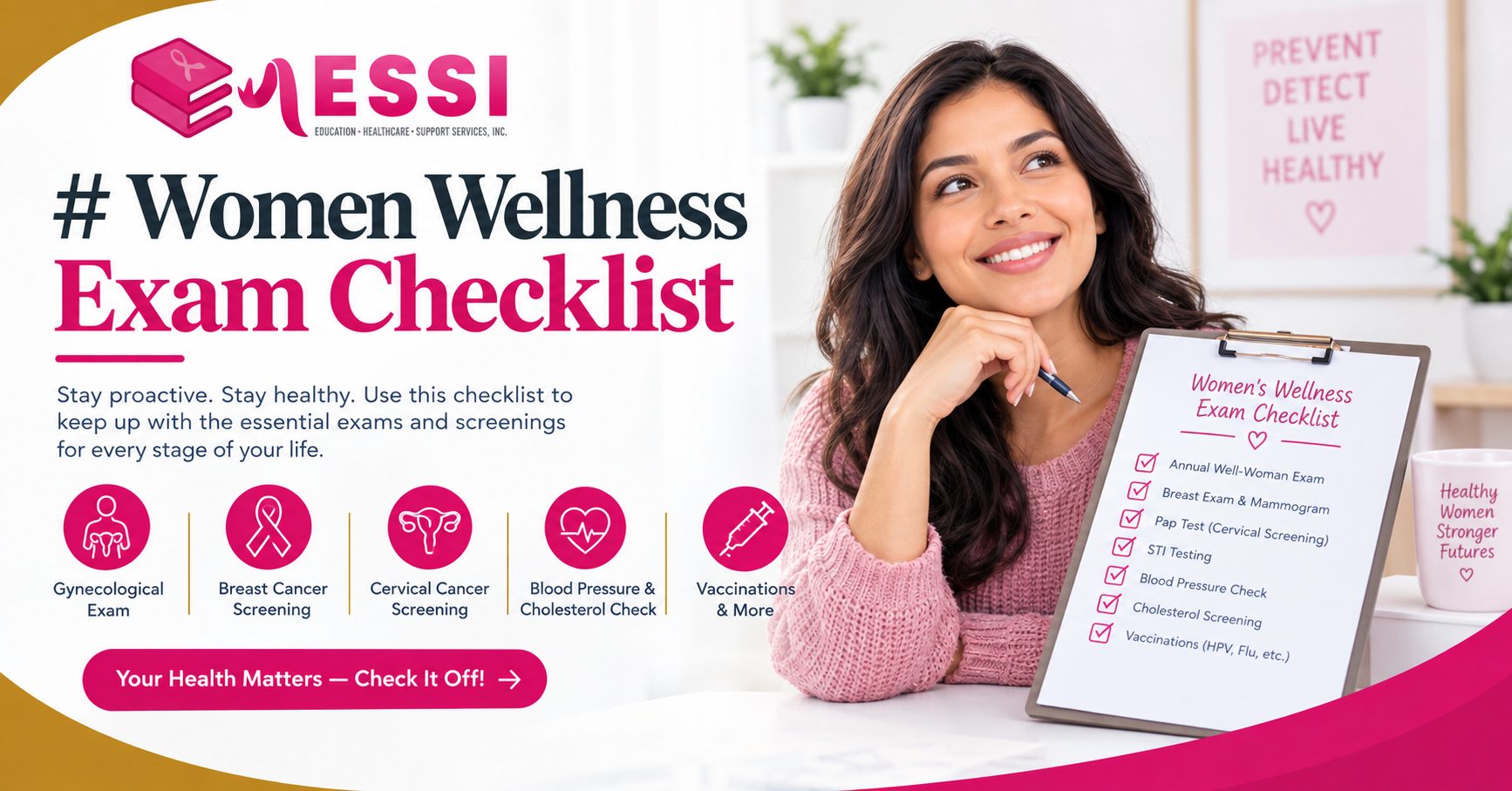
- Annual wellness exam notes, including recent blood pressure, labs, or concerns from a primary care visit
- Well-woman visit questions about periods, pain, sex, fertility, menopause, birth control, or bladder changes
- Gynecological exam history, including prior Pap results, HPV results, pelvic pain, infections, or surgeries
- Well-woman check goals, such as STI testing, contraception review, pregnancy planning, or symptom evaluation
- Preventive care exam records, including vaccines, cancer screening, and family history of breast, ovarian, uterine, colon, or cervical cancer
- wellness check details, including medications, supplements, allergies, mood changes, sleep issues, and new diagnoses
A simple note on your phone works. Write down the first day of your last period, cycle changes, symptoms, medications, and any questions you’d feel awkward asking out loud. Awkward questions are usually the ones most worth asking.
How EAESSI Supports Women in Getting the Care They Need
Along with a well-woman exam, EAESSI helps take away one big worry, the cost of getting checked. EAESSI is a nonprofit working in Spotsylvania and across Northern Virginia, focused on making sure money never stops a woman from getting proper care.
If you are between the ages of 39 and 64 and have no health insurance, EAESSI covers the cost of your mammogram. So while your well-woman visit covers your overall health, EAESSI can help with the breast screening part of it.
Everything stays private and judgment-free. You just reach out, share your situation, and their team helps set up the appointment and guides you through the next steps.
Use location searches to narrow the options, then ask better questions. Does the practice offer a well-woman exam for new patients? Can they manage contraception, STI testing, menopause concerns, and abnormal bleeding? If a Pap or HPV test is due, will they explain the result and next steps in plain language? The best clinic is not always the closest one; it’s the one that makes preventive care clear and usable.
Conclusion
A well-woman exam is one of the few appointments built around prevention, privacy, and honest questions. It helps separate what’s normal from what needs attention, and it gives you a plan instead of guesswork. Don’t wait until a symptom becomes hard to ignore. Put the visit on your calendar, bring your questions, and use the time for the care that’s easy to postpone but worth getting right.
Frequently Asked Questions:
What is the difference between a wellness visit and a gynecology visit?
A wellness visit reviews overall health and prevention. A gynecology visit focuses more on reproductive and sexual health. Many appointments combine both, especially when women’s preventive care is part of the visit.
How often should I have this visit?
Most people should plan a well-woman exam once a year, though the exact services done at that appointment may change. HRSA-supported guidance recommends at least one preventive visit per year across the lifespan.
Do I need a Pap test every year?
No. Pap and HPV screening schedules depend on age, results, and risk factors. Your clinician can tell you what is due based on current guidance and your history.
Is a pelvic exam always required?
No. ACOG says pelvic exams are recommended when symptoms or medical history indicate a need. You can still benefit from the visit without having a pelvic exam.
Can I go if I’m on my period?
Usually, yes. Call the office if you expect heavy bleeding or if a specific test is planned. For many conversations, prescriptions, screenings, and concerns, your period does not make the visit pointless.