What Are the Warning Signs of Breast Cancer in Women?
Have you ever felt a new lump and wondered if it meant something serious? Breast Cancer Warning Signs can show up in many different forms, and most women never learn to spot them early. Most breast changes turn out to be completely harmless. But new lumps, skin dimpling or unusual nipple discharge should never be ignored.
Table of Contents
ToggleMany women miss these signs because they look small at first. Skin changes like redness, puckering or a flaky texture can point to something deeper too. Persistent pain in one exact spot also deserves a closer look from a doctor.
This guide walks you through every warning sign your body might show. You will also learn why regular checkups matter, even when nothing feels wrong. Catching changes early gives you the best chance at fast, effective care.
Breast and Underarm Lumps
A new lump or thick spot is often the very first sign. You might feel these physical shifts while taking daily showers.
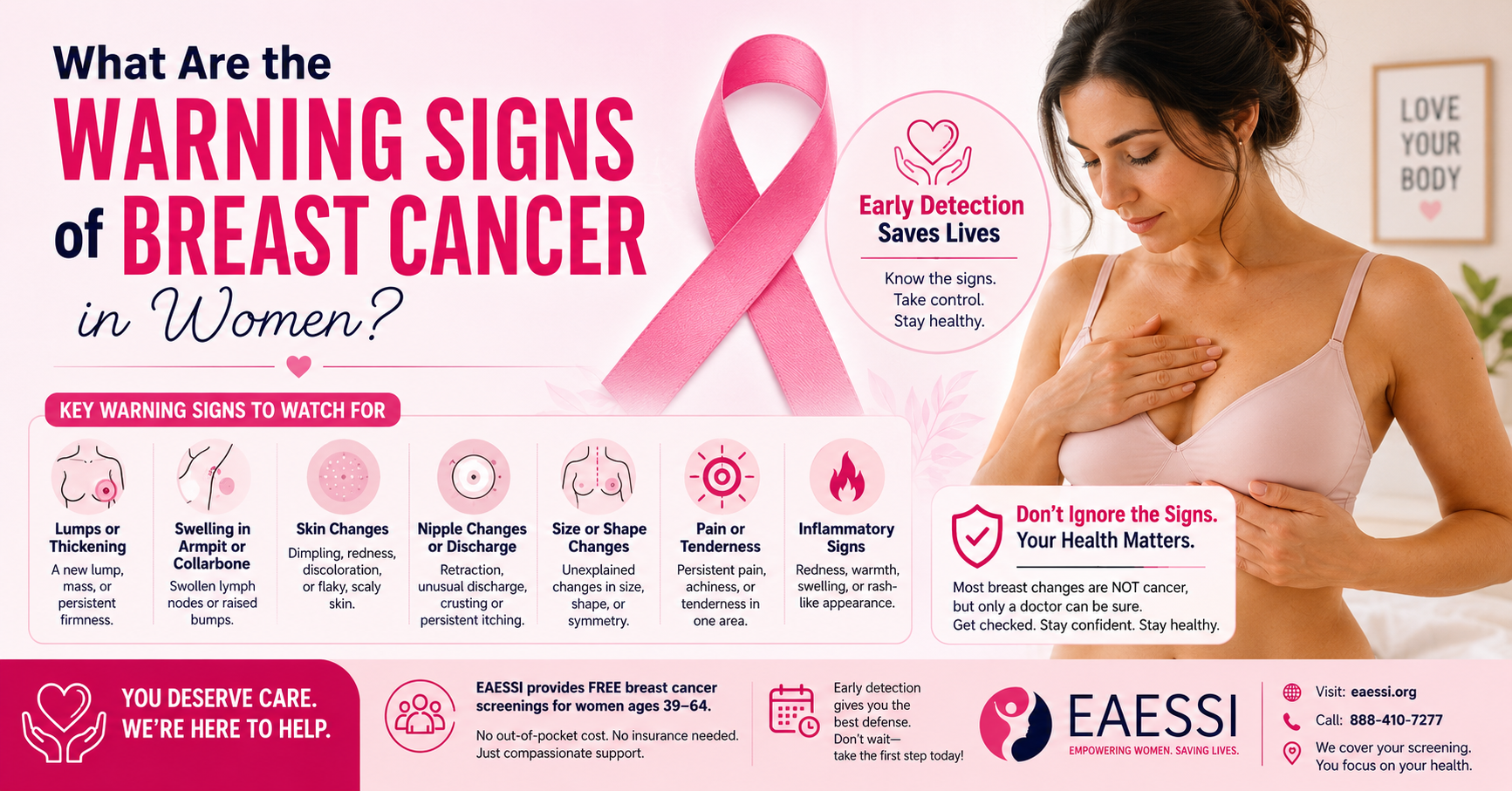
- New lump or mass: Lumps with smooth surfaces that don’t hurt are common. They may also be soft or rounded. A lump may be tender to the touch and may also feel totally firm. A lump may hurt and may or may not be firm. When you touch a lump, it may go away, or it may remain as is even after your monthly period ends. The safest thing you can do is to get it checked by a doctor.
- Swelling in your armpits: A lump or thickening that may be in or near your armpit can be common. A swollen lymph node may feel like a small, firm bean. They are swollen because they collect fluid that is not supposed to be in your chest. Finding them early helps doctors act fast.
- Persistent firmness: A solid spot that stays firm throughout your whole monthly period. Normal cysts often swell and shrink with hormones. But cancerous lumps stay steady without shrinking. Tracking these spots keeps you safe.
- Deep tissue mass: A small firm knot that feels fixed to your chest wall. It does not move freely when you press it. This firm connection needs an expert doctor’s check.
- Collarbone swelling: Raised nodes or tight bumps near your upper collarbone area. Lymph nodes near your throat can swell up. This happens when tissue shifts near the chest wall.
Skin Changes on the Chest
Surface skin shifts tell a very clear story. Cancer cells sometimes block tiny fluid channels under the surface.
Dimpling or Puckering
Skin that looks dimpled or textured like an orange peel (called peau d’orange). Small dents show up when deep tumors pull inward. The surface turns rough and uneven to your touch. You can spot these tiny dents under bright light.
Redness or Discoloration
Red, pink, purple, or dark skin patches that can be warm to the touch. The color shift stays present for many days. It does not go away like simple bug bites.
Flaky or Scaly Skin
Lifting or crusting skin on the breast or around the nipple. Dry patches look similar to common skin problems like eczema. The skin gets rough and splits open easily. Standard body lotions fail to fix this roughness.
Nipple and Shape Changes
Nipples react fast when underlying chest tissue shifts. Paying attention to small physical changes keeps you safe.
Nipple retraction: When looking at retracted nipples, they usually look flat, with some of them looking shifted, and sometimes looking different from how they did in the past. Retraction happens because of some kind of tissue growth happens in the deep tissue, so the growth pulls the nipple inward and causes the sudden retraction. Nipple shape shifts are looked at with patient concern because they can be suggestive of certain health problems.
Unusual discharge: Alright, if breast milk isn’t coming out of the nipple and there is some kind of discharge, then that’s not a good breast situation. Seeing discharge drip out of one nipple, and not the other or in addition to breast milk, is suggestive of a problem. If there is some kind of abnormal fluid oozing out, then it is either clear or bloody and both are NOT breast milk.
Size or shape shifts: An unexplained change in the contour, symmetry, size or weight of one breast. One side grows visibly larger or sags down. The physical shape looks unbalanced in your mirror.
Surface crusting: Tiny scaling crusts forming around the dark circle of your areola. Small sores leak fluid and turn into crusts. The area feels sore during your daily routine.
Persistent itching: Deep itching or burning feelings that stay around the center nipple. Scratching the skin gives zero relief from pain. The burning feeling stays present for many weeks.
Pain and Tenderness Signs
Most general breast soreness comes from normal monthly shifts. But constant pain in one precise spot needs care.
Target Point Pain
A sharp ache stays in one exact spot for weeks. This pain does not disappear after your monthly period ends. You feel the sharp pain in deep tissue layers. It stays active during your whole day.
Heavy Aching Sensation
A continuous sense of pressure builds in just one side. The sore area feels totally different from your other side. Your chest feels unusually heavy and tight inside. Wearing loose clothing gives very little relief.
Persistent Tenderness
Unusual soreness triggers pain from simple shirt friction. Speak with a doctor if this soreness stays for weeks. Soft touches feel surprisingly painful on your skin. This soreness remains steady over long periods.
Inflammatory Breast Cancer Warning Signs
Inflammatory breast cancer works differently than common forms. It rarely forms a single hard lump inside the chest. Instead, cancer cells block tiny lymph tubes right under your skin.
This blockage makes your chest look bruised and swollen fast. The skin turns pink or dark red and feels warm. Many women mistake this issue for a simple skin rash. If skin creams fail to fix red spots, ask a doctor. Getting checked early protects your body completely.
How EAESSI Can Help You with Your Breast Health
EAESSI helps women ages 39 through 64 get complete breast checks at zero out-of-pocket cost. We remove money hurdles so you can focus on staying healthy. Money or a lack of health insurance should never stand between you and your safety.
Our breast cancer screening grants remain completely private and judgment-free. You bring your health worries and we provide clear answers, full appointment setup and complete support.
Finding health issues early gives you the best defense shot. We cover your entire testing bill, so you receive proper medical care without delay. Check out our Free Mammograms service page or reach out through our About Us page to secure your fully sponsored health screening today.
Protecting Your Long-Term Wellness
Knowing the warning signs of breast cancer in women keeps you protected. Be vigilant for unexpected lumps, skin dimpling or leaking from the nipple. Most changes to breast tissue are due to benign cysts. But getting quick medical checks confirms your safety. Never skip routine checks because of insurance worries. Free grants exist to support your care journey today.
Frequently Asked Questions
What are the warning signs of breast cancer in women?
The main signs include a new hard lump, skin dimpling, sudden nipple inversion, clear or bloody discharge and unusual size changes in one breast.
Should I worry if my breast lump moves easily?
Yes, you should get any new lump checked. Early-stage tumors often move around freely before growing larger or fixing to deeper tissue.
Is breast pain a common sign of cancer?
Most breast pain stems from normal hormone shifts. However, constant aching in one single spot needs a prompt medical evaluation.
How does inflammatory breast cancer look different?
It causes rapid swelling, redness and an orange-peel skin texture. It rarely creates a distinct hard lump inside your chest.
Can I get screened if I do not have insurance?
Yes. Groups like EAESSI offer grant funds that cover full mammogram costs for uninsured women ages 39 through 64.